Distance vision
Driving, television, outdoor activities and recognising faces. A distance-focused monofocal plan commonly still needs reading glasses.


Cataract lens planning • Delhi Eye Care
The answer begins with your eyes, your daily life and the kind of vision you value—not with the price of a lens. Dr. Nidhi Gupta explains the realistic benefits and trade-offs before recommending an intraocular lens (IOL).

Start with your life
No IOL recreates every property of a young natural lens. The useful question is not “Which is the most premium lens?” but “Which optical strategy best fits my healthy-eye findings, work, hobbies and comfort with visual trade-offs?”
Driving, television, outdoor activities and recognising faces. A distance-focused monofocal plan commonly still needs reading glasses.
Computer screens, dashboards, kitchen work and conversation distance. Enhanced monofocal or EDOF strategies may extend this range.
Reading, mobile phones, sewing and fine close work. Multifocal or trifocal optics can broaden range in carefully selected eyes.
Five optical approaches
Names can sound complicated. This is the practical difference: how many ranges of focus the lens aims to provide, whether it corrects corneal astigmatism, and what optical compromises come with that design.
Optical simplicity and predictable distance-focused vision; near glasses are usually expected.
May provide more usable arm’s-length vision than a standard monofocal; reading glasses remain likely.
A toric design can be combined with different focus strategies when regular corneal astigmatism is suitable for correction.
Designed to extend clear vision from distance towards intermediate; fine near work may still require glasses.
Can reduce spectacle dependence across more distances in selected eyes, with greater potential for halos, glare or reduced contrast.
Side-by-side guide
| Lens strategy | Likely strength | Glasses commonly needed for | Important discussion |
|---|---|---|---|
| Monofocal | Clear vision at one selected focal range | Usually near; sometimes intermediate | Choice of distance target and whether monovision is appropriate |
| Enhanced monofocal | Distance with modestly extended intermediate function | Fine near work | The degree of extension varies by lens design and eye |
| Toric | Reduction of suitable regular corneal astigmatism | Depends on its accompanying focus design | Corneal measurements, stability and rotational alignment |
| EDOF | Distance and functional intermediate range | Small print or prolonged reading may need help | Halos or glare can still occur; retinal and corneal health matter |
| Multifocal / trifocal | Wider range and greater potential spectacle independence | Occasional tasks or very fine print | Halos, glare, contrast sensitivity and careful patient selection |
Which lens may suit me?
This is a counselling pathway, not an online prescription. Your examination can change the answer.
If night driving is central to your life or you are very sensitive to glare, we discuss the contrast and halo profile of each optical design carefully.
Distance, computer range or close reading? Bring your typical working distances—especially for desktop monitors, instruments, music or crafts.
Stable, regular astigmatism may benefit from toric correction. Irregular astigmatism needs a different conversation.
Macular disease, glaucoma, corneal irregularity or significant dry eye can reduce the benefit or suitability of some range-extending optics.
A patient comfortable with reading glasses may prefer optical simplicity. A patient seeking greater spectacle independence may accept different trade-offs.
Precision begins before surgery
Careful biometry and corneal assessment improve the quality of planning. They cannot guarantee a spectacle-free result, but they help Dr. Nidhi choose the calculation strategy and identify factors that may influence the outcome.
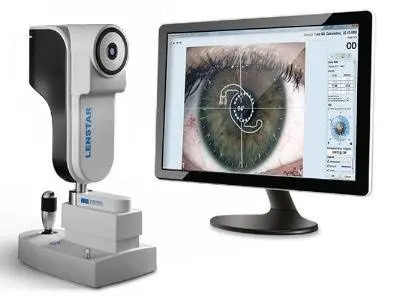
Measures eye length and other parameters used to calculate IOL power. Previous LASIK or PRK, unusual eye dimensions and fixation quality are considered when selecting the formula and target.
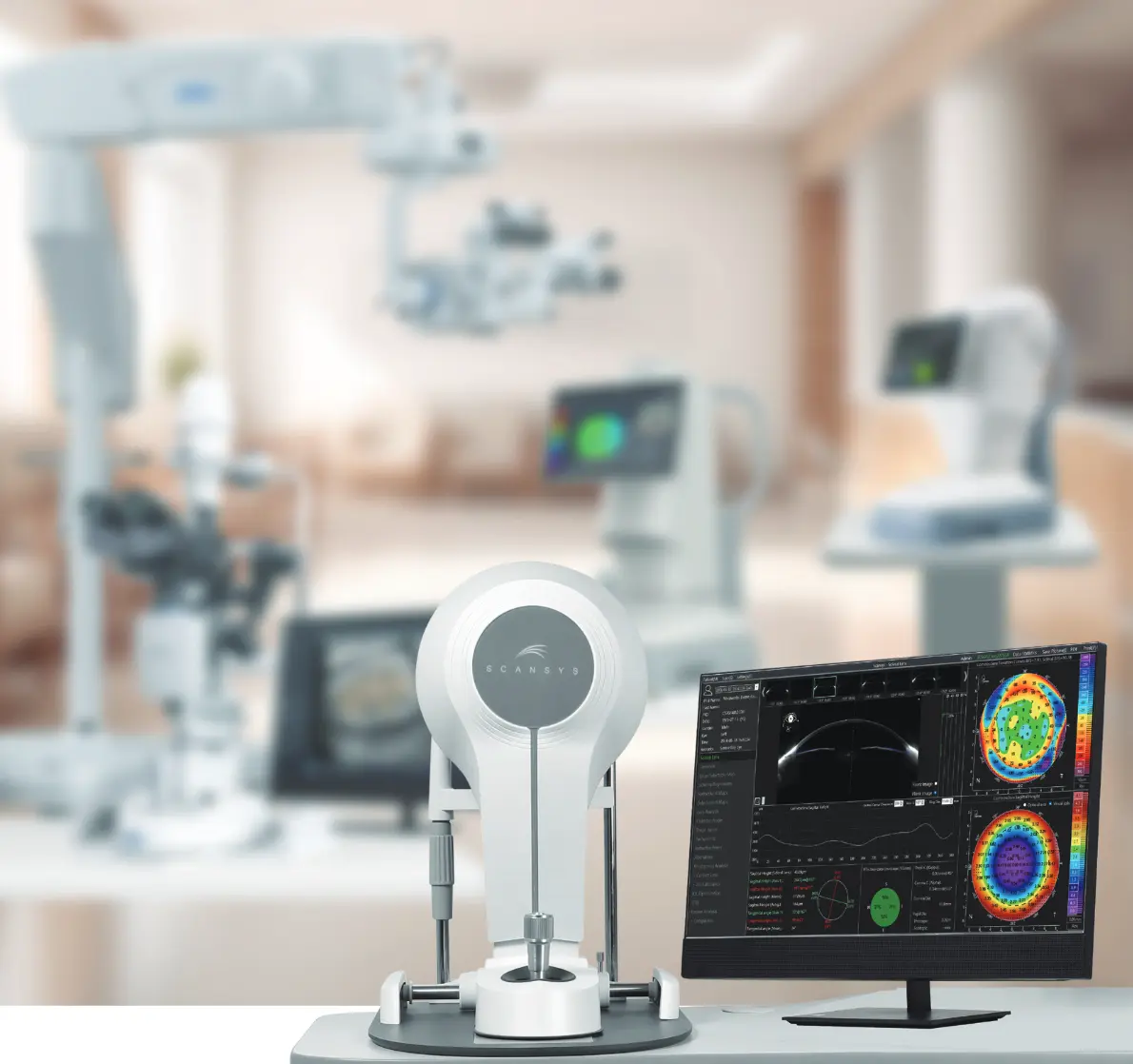
Maps corneal shape and helps evaluate astigmatism and irregularity. This is particularly relevant when considering toric or range-extending lens strategies.
When an advanced lens may not be the best lens
Range-extending lenses divide or stretch light to provide more than one useful focus. In some eyes, this can magnify existing limitations rather than improve daily vision.
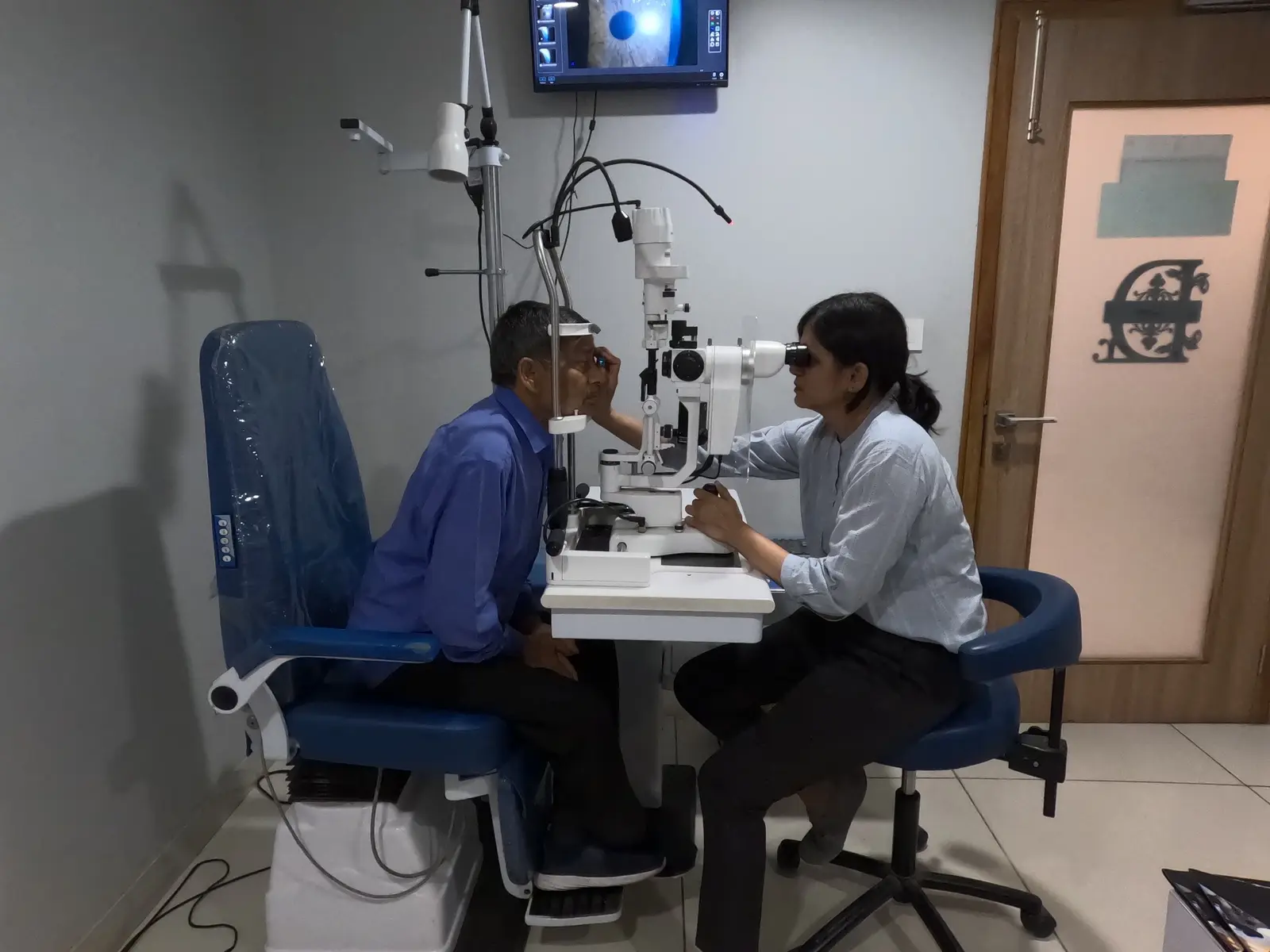
Counselling led by Dr. Nidhi Gupta
Dr. Nidhi Gupta is Medical Director and leads cataract care at Delhi Eye Care. With over 18 years of experience and 15,000+ ophthalmic surgeries, she is known for meticulous planning and equally attentive post-operative care.
“My role is not to sell a lens. It is to help each patient understand what their eye can realistically achieve—and choose accordingly.”
Before surgery, the team documents your visual priorities, explains where glasses may still help, and discusses optical effects such as halos or glare where relevant.
From Dr. Nidhi’s desk
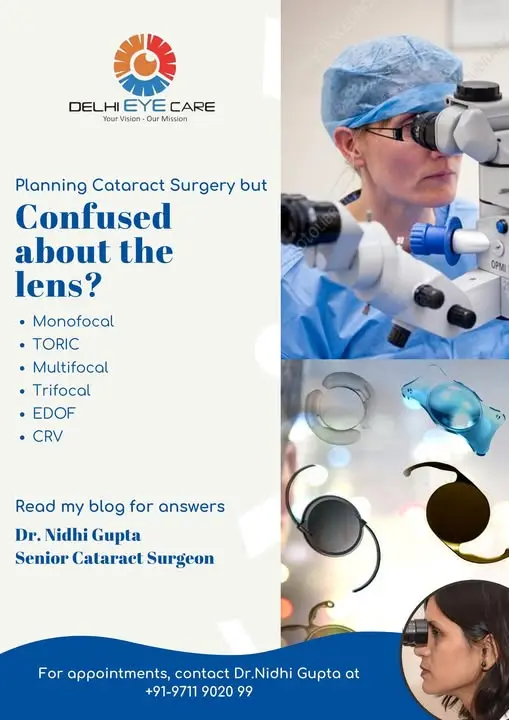
Dr. Nidhi explains the language patients commonly hear—monofocal, toric, multifocal, trifocal, EDOF and more—and why the answer must be personalised.
Read Dr. Nidhi’s article →Questions patients ask
No. An IOL can reduce dependence on glasses for selected distances, but no lens can guarantee complete spectacle independence. Residual power, astigmatism, eye health, healing and task size all matter.
No. It offers a broader range of focus but may bring halos, glare or contrast trade-offs. For some eyes and lifestyles, a monofocal strategy is the more appropriate choice.
A toric IOL is designed to reduce suitable corneal astigmatism. It must be selected from accurate measurements and positioned on the planned axis. It can have a monofocal or range-extending optical design.
You may still be eligible for cataract surgery, but these findings influence lens selection and calculation. Additional assessment may be needed, and the visual outcome can be limited by conditions outside the cataract.
Often they do, but the target may differ between eyes in selected plans such as monovision. The choice depends on eye health, dominance, existing vision and whether your brain is likely to tolerate the difference.
No. First clarify the optical category and your visual target. Dr. Nidhi can then discuss suitable models and brands available for your measurements and clinical needs.
Continue your cataract journey
Delhi Eye Care
Evaluation helps separate what is technically available from what is appropriate for your eye.
Call: +91 92208 92424
Specialist: Dr. Nidhi Gupta, Medical Director
Cataract, Refractive & Glaucoma Surgeon
Patient information supports—but does not replace—personal medical advice. Medically reviewed by Dr. Nidhi Gupta • Last reviewed September 2026