Blurred or hazy vision
Faces, print and road signs look less distinct despite cleaning spectacles or updating the prescription.


Recognise the change • Confirm the cause
Cataract often develops quietly. Vision may become hazy, colours less vivid and headlights more troublesome—yet similar symptoms can come from other eye conditions. A complete examination establishes what is actually responsible.
 Daytime haze
 Night glare
Common visual changes
Symptoms usually develop gradually and may differ between the two eyes. A new spectacle prescription can help for a time, but increasing lens opacity eventually limits the improvement glasses can provide.
Faces, print and road signs look less distinct despite cleaning spectacles or updating the prescription.
Headlights, sunlight or bright indoor lighting scatter more, making night driving uncomfortable.
Colours appear duller, whites may look yellowed and low-contrast objects become harder to distinguish.
Steps, faces and objects may be harder to see in restaurants, evenings or poorly lit rooms.
Reading and detailed work require stronger illumination, larger print or more frequent pauses.
A second or “ghost” image may remain in one eye even when the other eye is covered.
An important distinction
A cataract is one possible cause of reduced vision. Dry eye, an outdated spectacle prescription, corneal disease, glaucoma, macular disease and retinal conditions can produce overlapping complaints.
The key question during assessment is not only “Is there a cataract?” but also “Does the cataract explain the degree and pattern of visual difficulty?”
Rapid visual loss suggests another cause and should be assessed promptly.
Age-related cataract is usually painless and does not typically cause a red eye.
Bent lines, a central patch or field loss may indicate macular, retinal or optic-nerve disease.
These are retinal warning symptoms—not routine features of cataract.
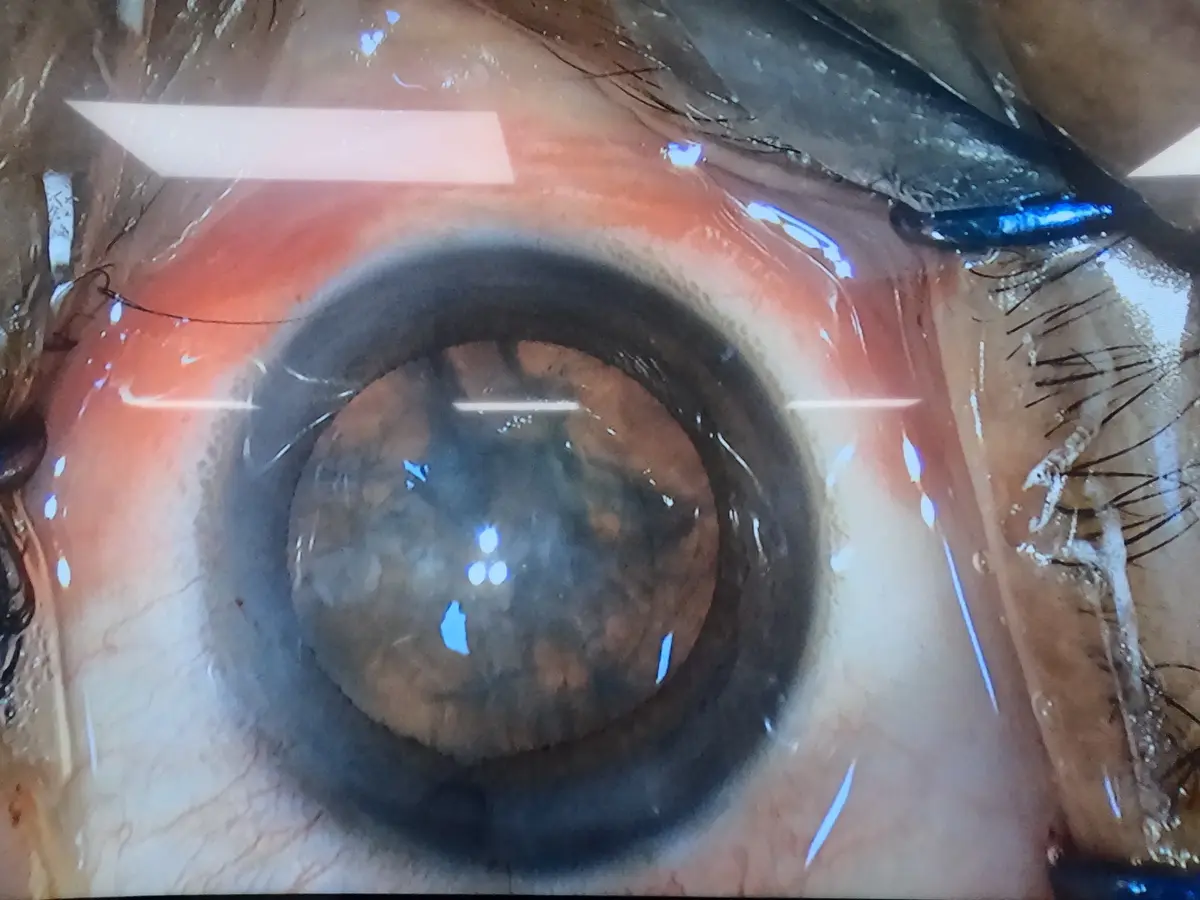
What the doctor sees
More than one pattern may coexist, and the label alone does not determine when surgery is needed.
Central lens change, often associated with gradual distance blur, colour shift and prescription change.
Spoke-like peripheral opacities that can scatter light and contribute to glare.
Often causes disproportionate glare and near-vision difficulty, sometimes at a younger age.
Your cataract evaluation
Dr. Nidhi Gupta and the DEC team assess whether cataract is present, how much it affects vision and whether another eye condition may influence the outcome.
Driving, reading, screens, mobility and work demands establish the functional impact.
This shows how much clarity can still be recovered with an updated prescription.
The cornea, cataract, eye pressure, optic nerve and retina are reviewed; dilating drops may be used.
OCT, corneal topography, biometry or other investigations are selected according to the findings and surgical planning needs.
When is surgery considered?
Cataract surgery is usually considered when visual difficulty affects useful activities despite appropriate spectacles, or when the cataract interferes with examination or treatment of another eye problem.
You remain comfortable and safe in daily activities, improved glasses are adequate, and examination shows no reason for earlier intervention.
Blur or glare limits driving, reading, work, mobility or independence; spectacle changes no longer help enough; or the cataract restricts management of another eye condition.
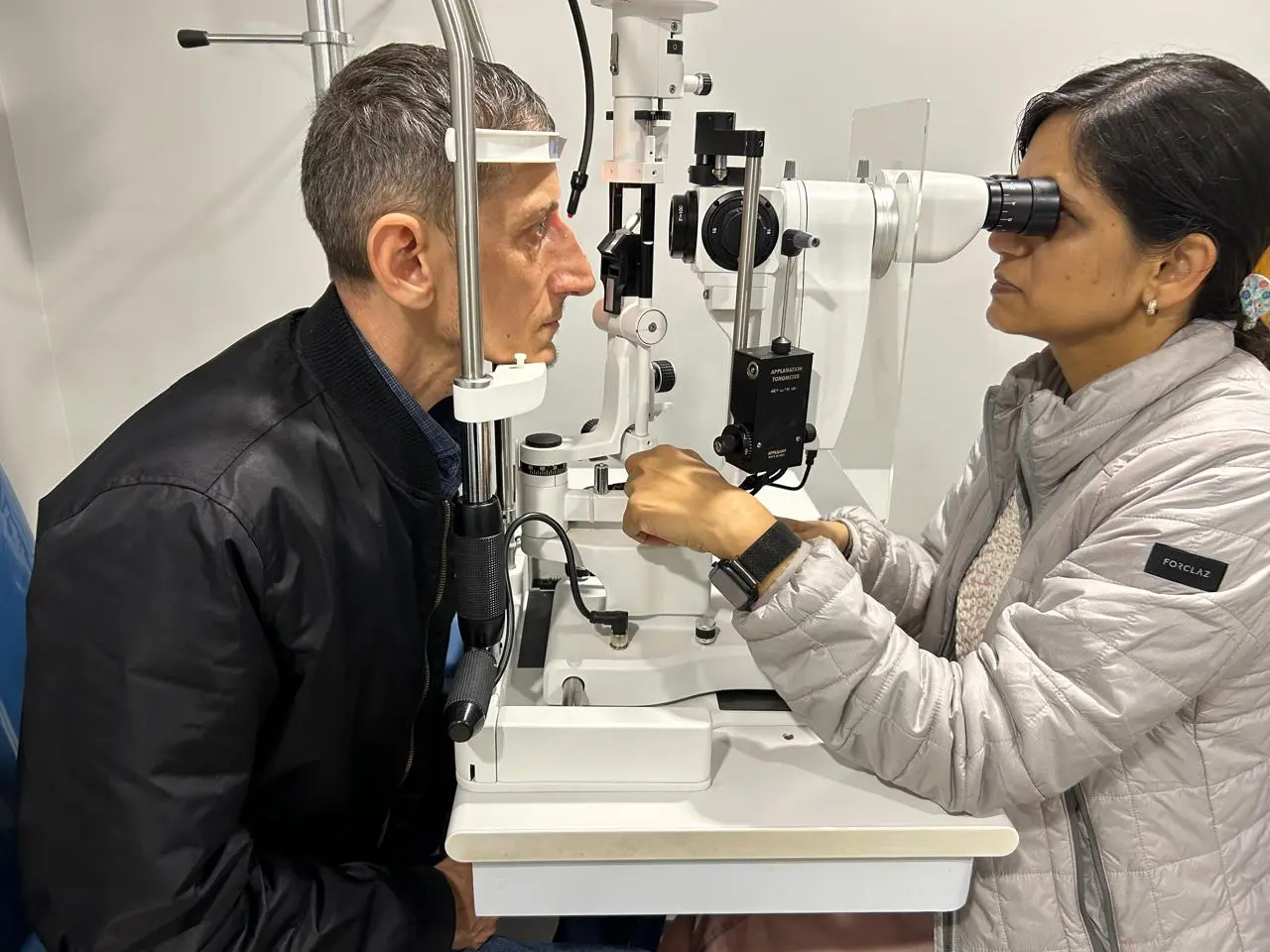
Evaluation led by Dr. Nidhi Gupta
Dr. Nidhi Gupta is Medical Director and leads cataract care at Delhi Eye Care. With over 18 years of experience and 15,000+ ophthalmic surgeries, her approach combines meticulous evaluation with careful counselling and post-operative follow-up.
“The presence of a cataract is only the first finding. We must confirm whether it explains the patient’s visual difficulty and what the rest of the eye allows us to achieve.”
Before your visit
Include the pair you use most and any recent prescription or eye records.
Mention eye drops, blood thinners, prostate medicines, diabetes treatment and drug allergies.
Examples—night driving, small print, computer work, stairs, faces or sewing—are more useful than “vision is weak.”
Questions patients ask
Age-related cataract is usually painless. Headache may relate to visual strain or another cause, while significant eye pain requires assessment for conditions other than routine cataract.
Yes. Cataract may be present in both eyes but progress at different rates, or be more important in one eye because of injury, inflammation, medicines or other factors.
An updated prescription may improve vision in earlier cataract, but glasses cannot remove lens opacity. When cataract limits useful vision despite appropriate correction, surgery is the definitive treatment.
No. Modern planning usually considers functional difficulty and eye health rather than waiting for a cataract to become very dense.
OCT provides a cross-sectional view of the macula and can identify changes that may not be obvious from symptoms alone. It is used when clinical findings or risk factors make the information relevant.
No. Symptoms overlap with other eye conditions. Confirmation requires examination by an eye specialist.
Continue your cataract journey
Delhi Eye Care
A complete assessment confirms whether cataract is responsible and helps you decide the next step without unnecessary haste.
Call: +91 92208 92424
Specialist: Dr. Nidhi Gupta, Medical Director
Cataract, Refractive & Glaucoma Surgeon
Patient information supports—but does not replace—personal medical advice. Medically reviewed by Dr. Nidhi Gupta • Last reviewed September 2026