By Delhi Eye Care
If you rely on glasses or contact lenses to see clearly, you may have wondered whether LASIK could offer a more convenient alternative. Both contact lenses and LASIK can correct common refractive errors, but they differ significantly in terms of cost, comfort, maintenance, risks, and long-term results.
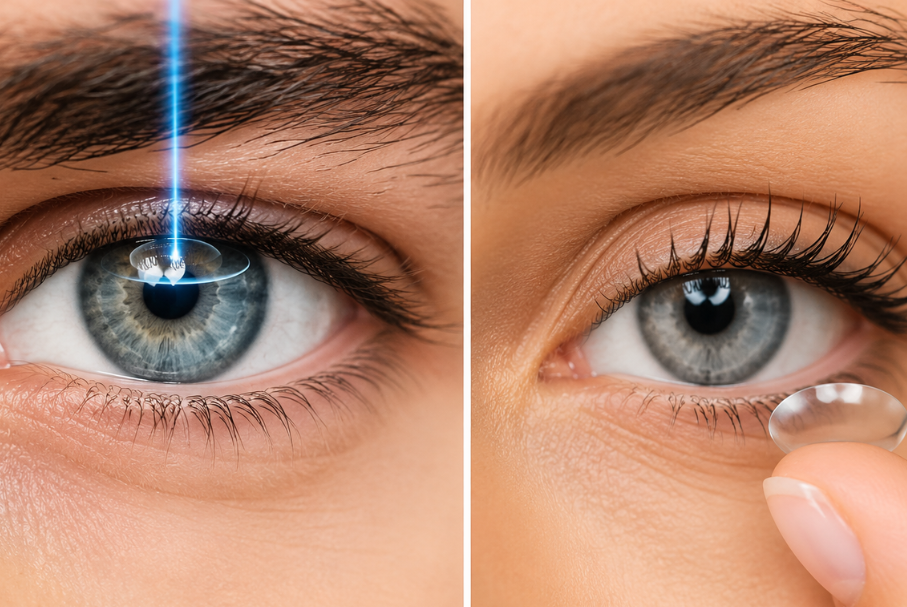
Contact lenses provide temporary vision correction and require regular care, while LASIK is a surgical procedure designed to permanently reshape the cornea and reduce dependence on glasses or contact lenses.
In this guide, we’ll compare LASIK vs contact lenses based on cost, comfort, safety, convenience, recovery, and long-term results to help you understand which option may be more suitable for your eyes and lifestyle.
What Is LASIK Eye Surgery?
LASIK (Laser-Assisted In Situ Keratomileusis) is a laser vision correction procedure that reshapes the cornea to correct refractive errors.
LASIK can be used to treat:
Myopia (Nearsightedness)
Hyperopia (Farsightedness)
Astigmatism
By changing the shape of the cornea, LASIK helps light focus more accurately on the retina, potentially reducing the need for glasses or contact lenses.
What Are Contact Lenses?
Contact lenses are thin medical devices placed directly on the surface of the eye to correct refractive errors.
They are available in different types, including:
Daily disposable lenses
Monthly disposable lenses
Toric lenses for astigmatism
Multifocal lenses
Specialty contact lenses
Unlike LASIK, contact lenses do not permanently change the structure of the eye. They provide vision correction only while they are being worn.
LASIK vs Contact Lenses – Quick Comparison
LASIK: Permanent corneal reshaping
Contact Lenses: Temporary vision correction
LASIK: Minimal daily maintenance after recovery
Contact Lenses: Require regular cleaning or replacement depending on lens type
LASIK: One-time surgical cost
Contact Lenses: Ongoing recurring expenses
LASIK: Short recovery period
Contact Lenses: No surgical recovery required
LASIK: May significantly reduce dependence on corrective lenses
Contact Lenses: Need to be worn regularly for corrected vision
LASIK vs Contact Lenses – Which Is More Comfortable?
Comfort can vary from person to person.
Contact lenses may feel comfortable initially, but some users experience:
Dryness
Eye irritation
Redness
Foreign-body sensation
Discomfort after prolonged use
Long hours of screen use, air conditioning, dust, or improper lens care can make contact lenses less comfortable.
LASIK eliminates the need to place a lens directly on the eye, which can be a major convenience for people who experience contact lens discomfort.
However, some people may experience temporary dryness or irritation after LASIK, particularly during the initial recovery period.
Which Is Easier to Maintain?
Contact lenses require regular maintenance.
Depending on the lens type, you may need to:
Clean and disinfect lenses
Replace lenses according to schedule
Use appropriate lens solution
Wash your hands before handling lenses
Store reusable lenses correctly
Avoid sleeping or swimming with lenses unless specifically approved by your eye-care professional
LASIK generally requires much less daily maintenance after the eye has healed.
You will still need routine eye examinations and should follow your ophthalmologist’s recommendations for long-term eye health.
LASIK vs Contact Lenses – Which Is Safer?
Both options can be safe when used appropriately and when patients are properly evaluated.
Contact lenses can increase the risk of eye infections and other complications if they are not worn or cared for correctly.
LASIK is generally considered safe for appropriately selected candidates, but like any surgical procedure, it has potential risks and side effects.
Possible LASIK side effects may include:
Dry eyes
Glare or halos
Light sensitivity
Temporary fluctuations in vision
Difficulty with night vision
A detailed pre-LASIK evaluation is essential to determine whether the procedure is suitable for you.
LASIK vs Contact Lenses – Cost Comparison
The cost difference becomes more noticeable when you consider long-term use.
Contact Lens Cost
Contact lenses involve recurring expenses such as:
Lenses
Cleaning solutions
Storage cases
Regular eye examinations
Replacement lenses
Daily disposable lenses may have a higher ongoing cost, while monthly lenses require regular replacement and cleaning.
LASIK Cost
LASIK usually involves a one-time procedure cost, although the price depends on the technology and treatment plan.
In Delhi, the cost may vary depending on the type of laser vision correction, diagnostic tests, surgeon expertise, and technology used.
While LASIK can have a higher upfront cost than contact lenses, it may be financially attractive over the long term for people who would otherwise continue purchasing lenses and related products for many years.
LASIK vs Contact Lenses – Results
Contact lenses provide clear vision while they are correctly fitted and worn.
However, you remain dependent on the lenses for vision correction.
LASIK aims to reduce dependence on glasses and contact lenses by permanently reshaping the cornea.
Many appropriately selected patients achieve significant improvement in unaided vision after LASIK, although individual results vary and some patients may still require glasses or contact lenses for certain activities.
How Long Does LASIK Take?
LASIK is generally a quick procedure.
The actual laser treatment takes only a short time, while the complete appointment includes preparation, evaluation, and post-procedure instructions.
Most patients experience noticeable improvement in vision soon after surgery, although vision may continue to stabilize during the following days or weeks.
Your ophthalmologist will provide personalized recovery instructions.
LASIK Recovery vs Contact Lens Use
One of the biggest differences between the two options is recovery.
Contact Lenses
There is no surgical recovery period. Once properly fitted, lenses can generally be worn according to your eye-care professional’s instructions.
LASIK
LASIK requires a short recovery period.
After surgery, you may experience:
Mild dryness
Temporary irritation
Light sensitivity
Fluctuating vision
You should avoid rubbing your eyes and follow all prescribed eye-drop and follow-up instructions.
Who Is a Good Candidate for LASIK?
LASIK may be considered if:
You are 18 years or older
Your prescription has remained stable
You have generally healthy eyes
Your cornea is suitable for laser correction
You do not have certain eye conditions that could make LASIK unsuitable
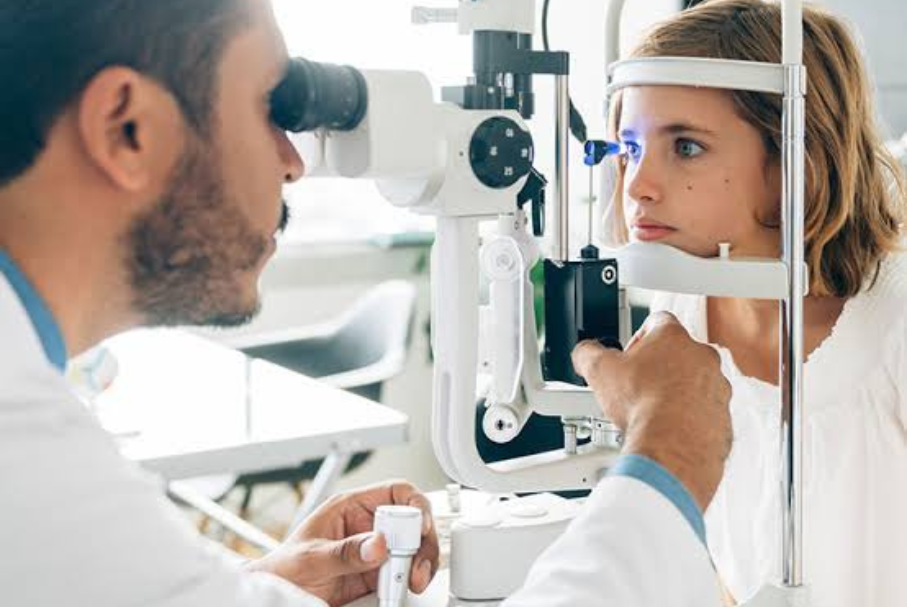
A comprehensive eye examination is required before surgery.
Who May Prefer Contact Lenses?
Contact lenses may be a suitable option for people who:
Do not want surgery
Are not eligible for LASIK
Have an unstable prescription
Prefer temporary vision correction
Want the flexibility to change their vision correction method
Your eye-care professional can help determine which type of contact lens is appropriate for your eyes.
Who May Prefer LASIK?
LASIK may be appealing to people who:
Want to reduce dependence on glasses or contact lenses
Dislike wearing contact lenses
Experience contact lens discomfort
Want a long-term vision correction option
Prefer greater convenience during sports and daily activities
However, LASIK is not suitable for everyone, so a detailed evaluation is essential before making a decision.
LASIK vs Contact Lenses for Sports and Active Lifestyles
Contact lenses can provide excellent vision correction during many physical activities, but they can sometimes become inconvenient.
They may move out of position, become dry, or require additional care during travel, outdoor activities, or sports.
For appropriately selected patients, LASIK can provide greater convenience by reducing or eliminating the need for corrective lenses during many activities.
Your ophthalmologist can advise whether LASIK is appropriate based on your eyes and lifestyle.
Which Is Better – LASIK or Contact Lenses?
There is no single answer that applies to everyone.
Contact lenses may be better if you prefer a non-surgical and reversible option.
LASIK may be better if you want long-term reduction in dependence on glasses or contact lenses and are medically suitable for the procedure.
The right choice depends on your prescription, corneal thickness and shape, eye health, lifestyle, expectations, and personal preferences.
Why Choose Delhi Eye Care for LASIK?
Experienced ophthalmologists
Advanced laser vision correction technology
Detailed pre-LASIK evaluation
Corneal mapping and diagnostic testing
Personalized treatment planning
Comprehensive post-operative care
Focus on patient safety and visual outcomes
At Delhi Eye Care, we evaluate your eye health and vision requirements before recommending LASIK. Our goal is to help you make an informed decision based on your individual needs rather than simply choosing a procedure.
Final Thoughts
Both LASIK and contact lenses can provide effective vision correction, but they offer very different experiences.
Contact lenses provide temporary correction and require ongoing care and replacement. LASIK offers a long-term approach that can significantly reduce dependence on corrective lenses in suitable candidates.
If you are tired of wearing contact lenses every day or want to explore whether LASIK could be right for you, a comprehensive eye examination is the best place to start.
Book Your LASIK Consultation Today
Thinking about switching from contact lenses to LASIK? Schedule a detailed LASIK evaluation at Delhi Eye Care and find out whether laser vision correction is suitable for your eyes, lifestyle, and vision goals.