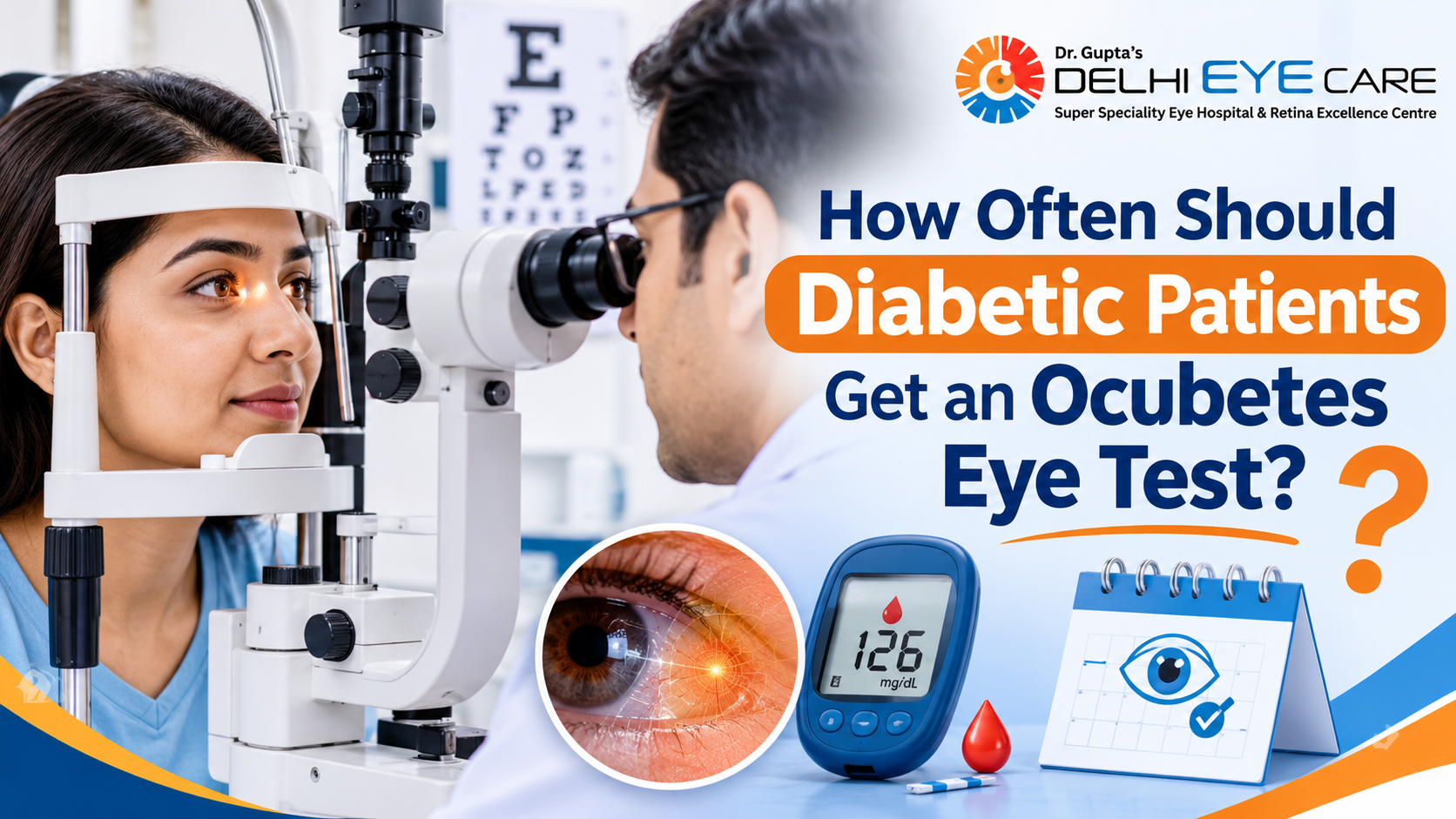
Diabetes does not only affect blood sugar levels. Over time, it can also damage the tiny blood vessels inside the eyes, particularly those that supply the retina. The concerning part is that this damage can begin even when your eyesight feels completely normal.
Many people with diabetes visit an eye specialist only after experiencing blurred vision or other problems. Unfortunately, waiting for symptoms may mean that retinal changes have already developed. Regular diabetic eye examinations can help identify these changes early and allow patients to receive appropriate care.
This is why regular screening through OCUBETES is important. If you are considering Ocubetes Treatment in Delhi, understanding how often you should get your eyes checked can help you protect your vision and avoid missing important follow-up appointments.
How Often Should You Get an OCUBETES Eye Test?
The frequency of diabetic eye examinations depends on how long you have had diabetes and whether any retinal changes have been detected.
People with Type 2 diabetes should have a comprehensive eye examination when they are diagnosed. Adults with Type 1 diabetes generally need their first examination within five years of diagnosis.
If your retina is healthy and your blood sugar levels are well controlled, your eye specialist may recommend regular annual examinations. After one or more normal annual examinations, some patients may be suitable for screening every one to two years.
However, if diabetic retinopathy is already present, you may need more frequent monitoring. Patients with progressing retinal damage or diabetic macular edema may require specialist reviews at shorter intervals.
The important thing is to follow the schedule recommended by your retina specialist rather than waiting until your eyesight changes.
Why Do Diabetic Patients Need Regular Eye Tests?
High blood sugar levels can gradually damage the small blood vessels in the retina. This condition is known as diabetic retinopathy.
In its early stages, diabetic retinopathy may not cause pain, blurred vision, or any noticeable symptoms. As the condition progresses, damaged blood vessels can leak fluid or blood, and abnormal blood vessels may begin to grow.
Without timely diagnosis and appropriate management, these changes can affect central vision and may lead to serious vision loss.
Regular retinal examinations help doctors identify:
- Early signs of diabetic retinopathy.
- Bleeding or leakage from retinal blood vessels.
- Swelling in the macula, called diabetic macular edema.
- Abnormal growth of retinal blood vessels.
- Changes that may require laser treatment, injections, or surgery.
Even if you can read, drive, and use your phone comfortably, you should not assume that your retina is healthy. A proper retinal examination is important for people living with diabetes.
What Is OCUBETES and How Does It Help?
OCUBETES is Delhi Eye Care’s dedicated diabetic eye-care initiative, developed to encourage regular retinal screening and continued care for people living with diabetes.
The purpose is not simply to conduct an eye examination once and leave patients unsure about what to do next. OCUBETES focuses on making diabetic eye care more organised through planned follow-ups, timely reminders, patient education, and continuity of medical records.
For example, after your retinal examination, the specialist can explain whether your eyes are healthy, whether any early changes need monitoring, and when you should return for another check-up.
If treatment is needed, the appropriate options can be discussed according to your retinal condition. This approach helps patients understand their eye health and stay connected with their follow-up care.
What Happens During an OCUBETES Eye Examination?
Your examination depends on your diabetes history, symptoms, and previous retinal reports. The specialist may recommend different tests to understand the condition of your retina.
1. Review of Your Medical History
The doctor may ask how long you have had diabetes, whether your blood sugar is controlled, which medications you take, and whether you have experienced any changes in your eyesight.
Previous eye reports and blood sugar records can also help the specialist understand your condition.
2. Vision Assessment
Your eyesight is checked to identify any changes in visual clarity. However, normal vision does not rule out early diabetic retinal damage.
3. Dilated Retinal Examination
Eye drops may be used to widen your pupils so that the specialist can examine the retina more clearly. This helps identify changes in the retinal blood vessels and other signs of diabetic eye disease.
4. Fundus Photography
A fundus camera captures images of the retina. These photographs help document its condition and can be compared with images from future visits to monitor changes.
5. OCT Scan
Optical Coherence Tomography (OCT) provides detailed cross-sectional images of the retina. It is particularly useful for identifying fluid or swelling in the macula.
Not every patient requires every test. Your specialist will recommend investigations according to your individual eye condition.
What Are the Warning Signs of Diabetic Eye Problems?
One of the biggest challenges with diabetic retinopathy is that it may develop without noticeable symptoms. However, as the condition progresses, some patients may experience:
- Blurred or fluctuating vision.
- Dark spots or floaters.
- Difficulty reading or focusing.
- Distorted or wavy vision.
- Sudden changes in eyesight.
- Flashes of light or a shadow across the vision.
Do not wait for your next scheduled appointment if you experience sudden vision loss, a curtain-like shadow, or a sudden increase in floaters or flashes. Seek urgent eye assessment.
What Happens If Diabetic Retinopathy Is Detected?
Finding diabetic retinopathy does not mean that every patient needs immediate treatment. The next step depends on how advanced the condition is and whether the central part of the retina is affected.
Regular Monitoring
Mild retinal changes may only require regular examinations and good control of blood sugar, blood pressure, and cholesterol.
Anti-VEGF Injections
These injections may be recommended for certain cases of diabetic macular edema and proliferative diabetic retinopathy. They help manage abnormal blood vessel activity and retinal swelling.
Retinal Laser Treatment
Laser treatment may be advised for selected patients with diabetic retinopathy. The aim is to reduce the risk of further retinal complications and protect remaining vision.
Vitrectomy Surgery
In advanced cases involving significant bleeding inside the eye or traction on the retina, vitrectomy surgery may be considered.
The right treatment depends on the examination findings. Your retina specialist will explain whether monitoring, injections, laser treatment, or surgery is appropriate.
Why Choose Delhi Eye Care for OCUBETES?
Diabetic eye care requires more than a one-time examination. Patients need accurate retinal evaluation, clear explanations, appropriate treatment decisions, and follow-up at the right time.
At Delhi Eye Care, OCUBETES was conceived by Dr. Shashank Rai Gupta, Founder Chairman and Senior Vitreo-Retina Surgeon, to make diabetic eye care more organised and continuous.
Dr. Shashank Rai Gupta has 17 years of dedicated experience in retina practice and specialist fellowship training in Vitreo-Retina from Aravind Eye Hospital. He previously served as Senior Consultant and Head of Vitreo-Retina and Uveitis at Vasan Eye Care Hospitals, New Delhi, and as a consultant at Venu Eye Institute and Research Centre.
His clinical expertise includes diabetic retinopathy, diabetic vitrectomy, retinal detachment, macular disorders, intravitreal injections, and retinal laser procedures.
Delhi Eye Care’s Retina Excellence Centre reports 7,468 retinal procedures and surgeries and 28,700 intravitreal injections and retinal laser procedures, with experience figures updated in September 2026.
Through OCUBETES, the clinic focuses on planned follow-ups, timely reminders, patient education, and continuity of retinal records. Patients can receive guidance about their examination findings and understand whether they need monitoring or further treatment.
For patients looking for Ocubetes Treatment in Delhi, Delhi Eye Care provides specialist-led retinal evaluation and treatment planning based on individual needs.
How Can You Take Better Care of Your Eyes If You Have Diabetes?
Along with regular retinal examinations, managing diabetes properly plays an important role in protecting your eyesight.
Here are some simple habits to follow:
- Keep your blood sugar levels within the range advised by your physician.
- Monitor your HbA1c as recommended.
- Manage blood pressure and cholesterol.
- Take prescribed medications regularly.
- Avoid smoking.
- Follow a balanced diet and maintain an active lifestyle.
- Attend your scheduled retinal examinations.
- Keep previous eye reports and scan results for comparison.
Remember, controlling diabetes and monitoring your retinal health should go hand in hand.
Final Thoughts
People with diabetes should not wait for blurred vision or other symptoms before getting their eyes examined. Diabetic retinopathy can develop silently, making regular retinal screening an important part of diabetes management.
Some patients may need annual examinations, while others with consistently normal retinal findings and well-controlled diabetes may be advised to return every one to two years. Those with existing retinal damage may require more frequent reviews.
OCUBETES at Delhi Eye Care encourages patients to make diabetic eye care a regular part of their health routine through planned screening, education, and follow-up.
Your eyesight is important. Make retinal screening a priority, even when everything seems normal.
FAQ’s
1. How often should diabetic patients get an eye test?
Many patients need annual examinations, but the schedule depends on their retinal condition.
2. Can diabetes damage the eyes without causing symptoms?
Yes. Diabetic retinopathy can develop before noticeable vision changes occur.
3. Is an eye test necessary if my eyesight is normal?
Yes. Normal eyesight does not rule out early retinal damage.
4. Does every diabetic patient need an OCT scan?
No. OCT is recommended when the specialist considers it clinically necessary.
5. Can diabetic retinopathy be treated?
Yes. Depending on its stage, treatment may include monitoring, injections, laser, or surgery.