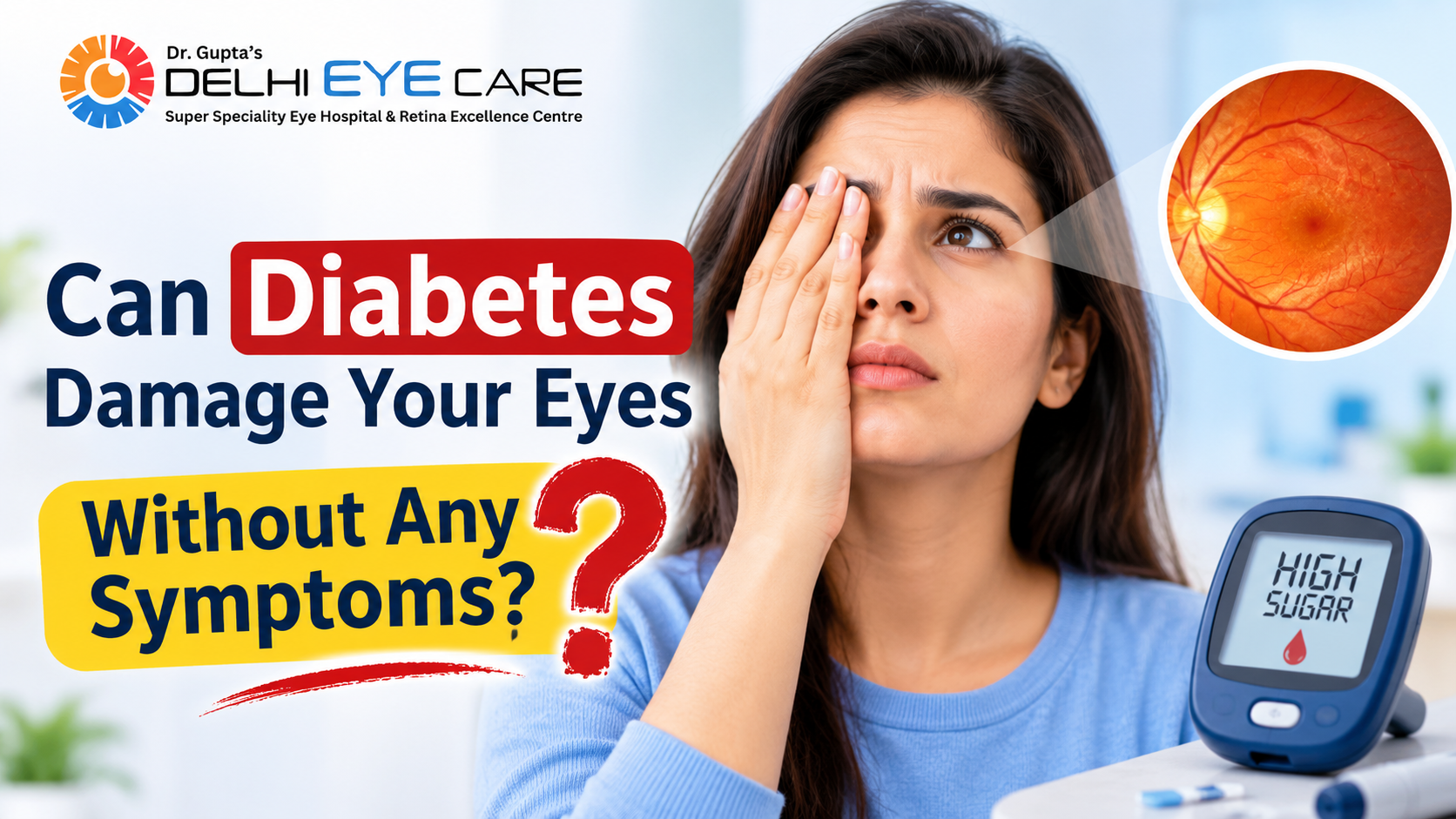
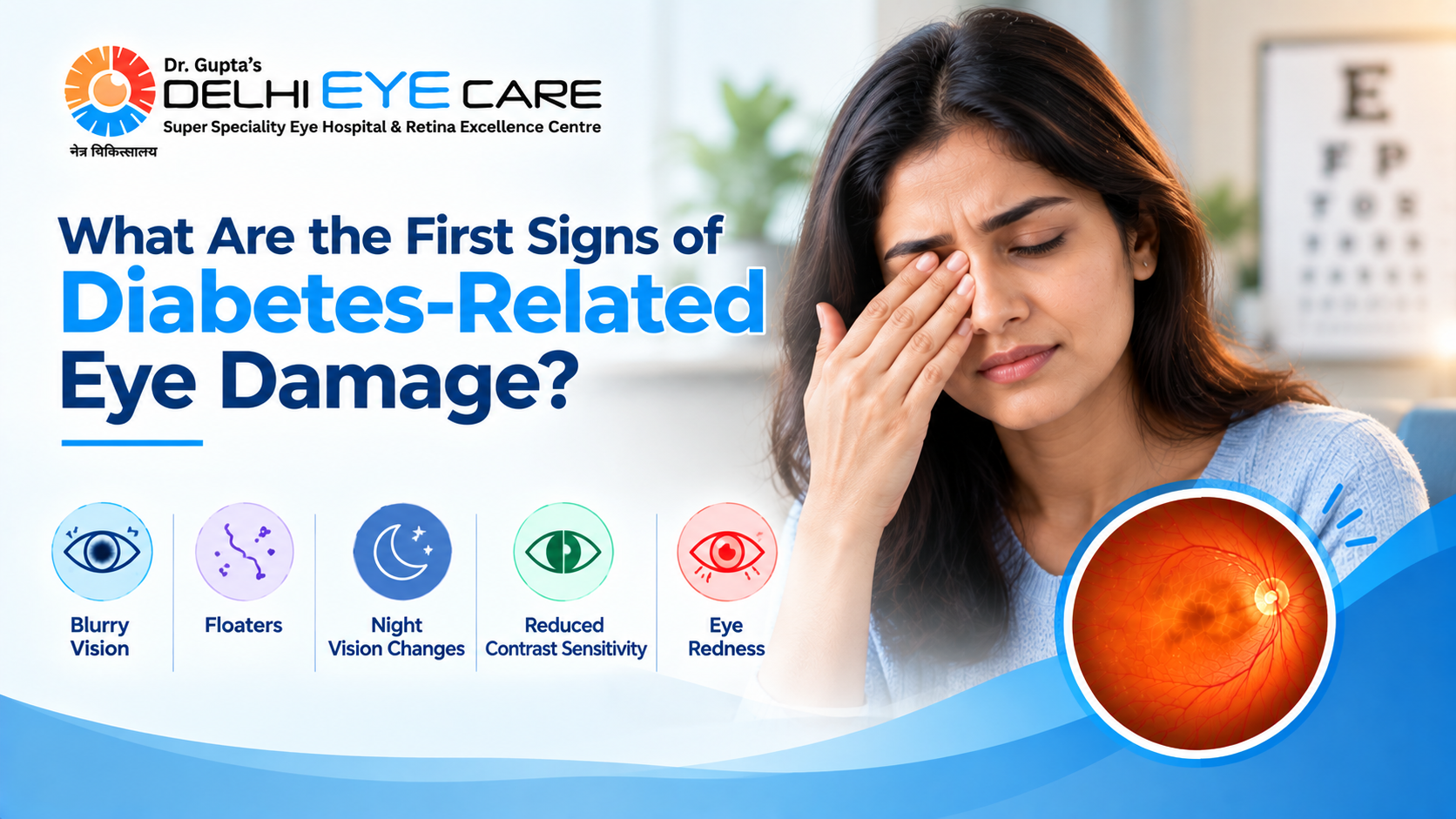
Can diabetes damage your eyes before you notice any change in your vision? What are the first signs you should watch for? And when should you see a retina specialist?
These are important questions for anyone living with diabetes. One of the biggest challenges with diabetes-related eye disease is that it may begin silently. A person can continue reading, working, driving, and using a phone normally while changes are already developing inside the retina.
Delhi Eye Care’s diabetic eye-care initiative, OCUBETES, highlights an important message: good vision does not always mean that the retina is unaffected. Early retinal changes may cause no pain, blur, or obvious warning signs.
For people searching for Best Diabetes eye Treatment in Delhi, understanding the early warning signs and the importance of regular retinal screening is an important first step.
Why Can Diabetes Damage the Eyes?
What actually happens to your eyes when blood sugar remains high?
Diabetes can affect the tiny blood vessels that nourish the retina. Over time, persistently high blood sugar can cause these vessels to weaken, leak fluid or blood, become blocked, or contribute to abnormal blood-vessel growth.
These changes can lead to conditions such as:
- Diabetic retinopathy
- Diabetic macular edema
- Retinal bleeding
- Cataracts
- Increased risk of glaucoma
Diabetic retinopathy is particularly concerning because early disease may not cause noticeable symptoms. Delhi Eye Care’s published diabetic-eye guidance therefore emphasizes comprehensive retinal examinations rather than waiting for vision problems to appear.
What Are the First Signs of Diabetes-Related Eye Damage?
Is blurred vision always the first warning sign?
Not necessarily.
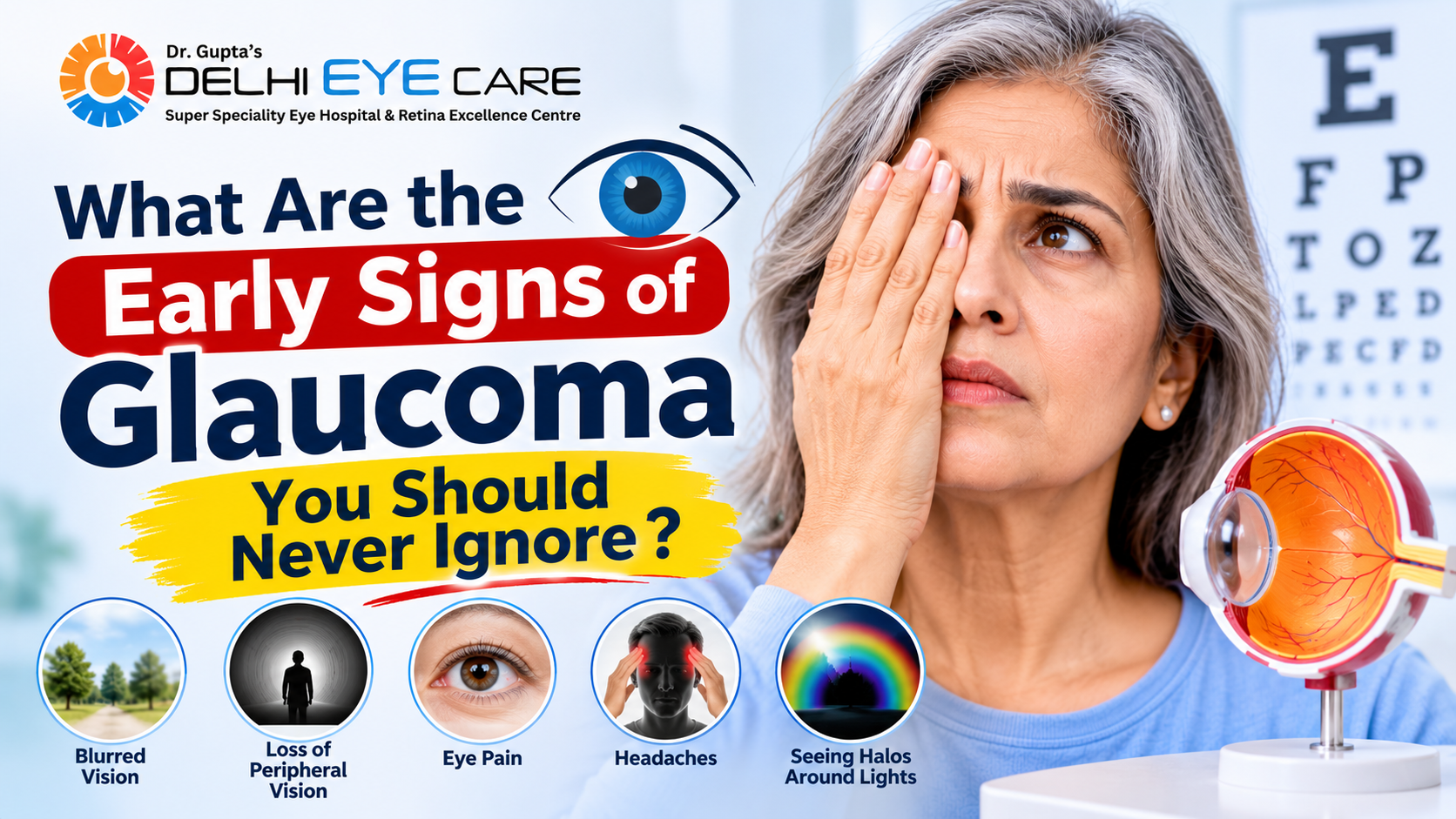
In the early stages, there may be no symptoms at all. When symptoms do appear, they can include:
- Blurred or hazy vision
- Difficulty reading
- Difficulty seeing details clearly
- New or increasing floaters
- Dark spots or streaks
- Distorted vision
- Difficulty seeing at night
- Changes in vision from day to day
Delhi Eye Care specifically lists blurred vision, floaters, dark spots, difficulty seeing at night, difficulty reading, and sudden changes in vision among warning signs of diabetic eye disease.
However, the absence of these symptoms should not be considered proof that your retina is healthy.
Can You Have Diabetic Eye Damage With Clear Vision?
This is one of the most important questions: if you can see clearly, why should you get your retina checked?
Because diabetic retinal changes can develop before they affect everyday vision.
A routine spectacle-power examination only tells part of the story. A comprehensive diabetic retinal examination allows the ophthalmologist to examine the retina directly and identify changes that may otherwise remain unnoticed.
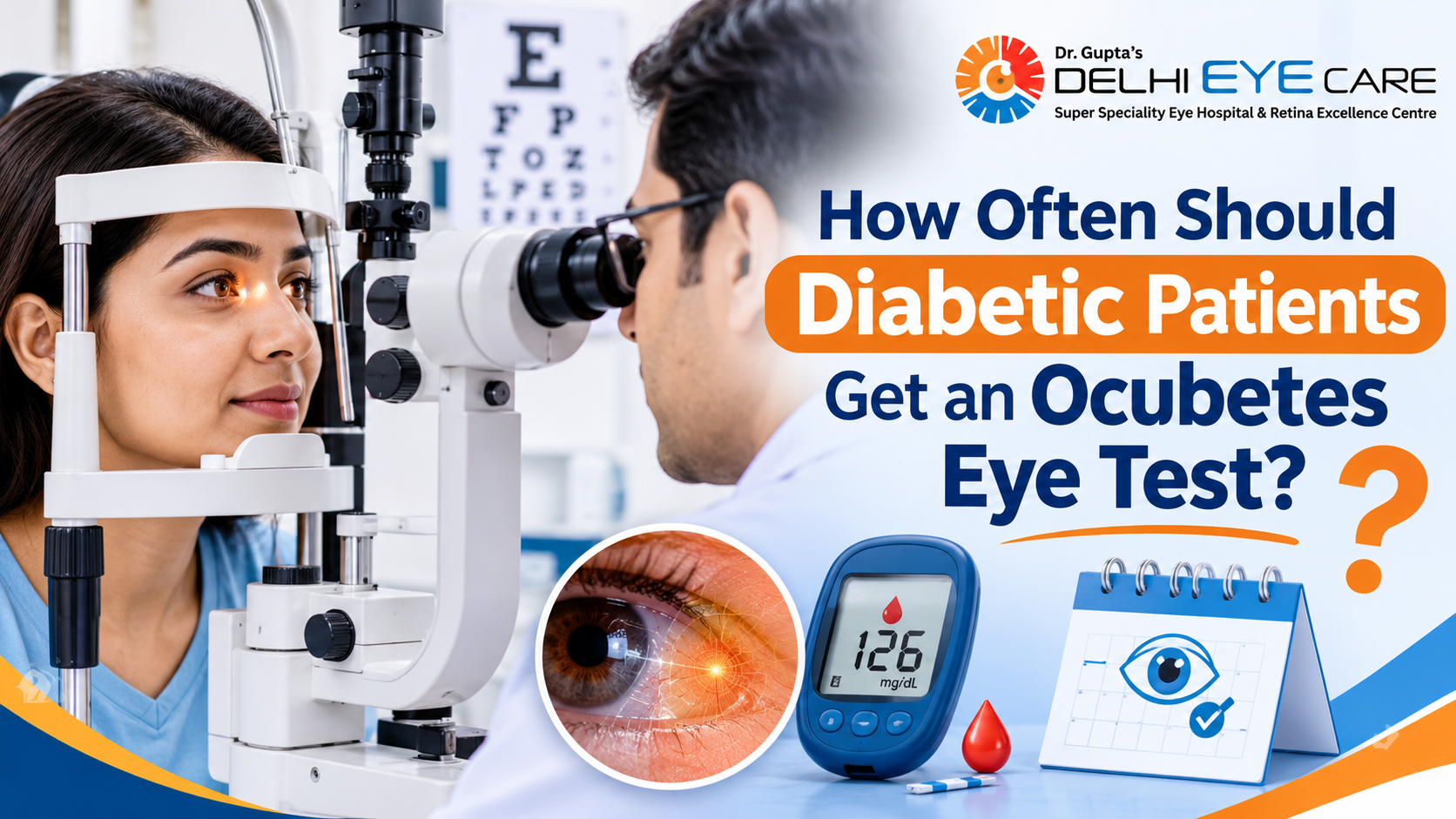
Delhi Eye Care’s OCUBETES pathway is specifically designed around this principle. It includes a dilated retinal examination and retinal imaging when clinically indicated, even when the patient has no obvious visual complaint.
What Does Diabetic Retinopathy Look Like in the Early Stage?
Can early diabetic retinopathy be present without vision loss?
Yes.
Early diabetic retinopathy may involve changes in the small retinal blood vessels, including tiny areas of vessel damage and leakage. A patient may not notice any difference in their vision at this stage.
As the disease progresses, more blood vessels can become damaged or blocked. Advanced disease can lead to abnormal new blood vessels, bleeding, scar tissue, and potentially serious retinal complications.
This progression is one reason regular retinal monitoring matters.
What Is Diabetic Macular Edema?
Why does diabetes sometimes affect the centre of your vision?
Diabetic macular edema, or DME, occurs when fluid accumulates in the macula—the central part of the retina responsible for detailed vision.
It can cause:
- Blurred central vision
- Difficulty reading
- Distorted vision
- Difficulty recognizing faces
- Reduced visual clarity
OCT imaging can help a retina specialist identify retinal swelling and fluid accumulation associated with macular disease. Delhi Eye Care includes OCT among the investigations used when clinically indicated.
Are Floaters a Sign of Diabetes-Related Eye Damage?
Should a diabetic patient worry about new floaters?
A few occasional floaters can occur for several reasons, but a sudden increase in floaters should not be ignored, particularly in someone with diabetes.
Advanced diabetic retinopathy can cause abnormal blood vessels to bleed into the vitreous, producing sudden floaters, dark spots, hazy vision, or a significant reduction in vision.
Other retinal conditions can also cause sudden floaters, flashes, or shadows. Therefore, the cause needs to be determined through a proper retinal examination rather than assumed to be diabetic retinopathy.
When Is a Sudden Change in Vision an Emergency?
What if you suddenly see flashes, many floaters, or a dark curtain?
Do not wait for your next routine appointment.
Delhi Eye Care advises prompt eye care for symptoms such as:
- Sudden vision loss
- Sudden blurred vision
- Many new floaters
- Flashes of light
- A curtain or shadow across vision
- Distorted vision
- New dark patches
These symptoms can be associated with serious retinal conditions, including retinal tears or retinal detachment, as well as diabetic retinal complications.
How Is Diabetes-Related Eye Damage Detected?
What happens during a diabetic retina examination?
Delhi Eye Care’s OCUBETES evaluation follows a structured process.
1. History and Vision Assessment
The team reviews the patient’s diabetes history, treatment history, previous eye records, and current visual concerns.
2. Dilated Retinal Examination
The retina is examined carefully after dilation. This allows the specialist to look beyond a routine glasses-power check.
3. Retinal Imaging
When required, the evaluation may include:
- Fundus photography
- OCT
- Angiography
These tests can help document retinal changes, assess swelling or leakage, and provide a baseline for future comparison.
4. Personalized Follow-Up
The findings are explained to the patient, along with the appropriate next step—whether that means routine monitoring, closer observation, additional imaging, or treatment.
When Should a Person With Diabetes Get a Retina Check?
Should you wait until your eyesight becomes blurry?
No.
Delhi Eye Care’s current OCUBETES guidance recommends:
- Type 2 diabetes: retinal examination at diagnosis
- Type 1 diabetes: screening within five years of onset for adults, or sooner if advised
- Ongoing diabetes: regular examination, generally every year or according to the specialist’s recommendation
- Pregnancy with pre-existing diabetes: retinal assessment before pregnancy or early in pregnancy
- Known retinopathy: follow the planned specialist review because closer monitoring may be required
Your individual schedule can vary according to retinal findings, diabetes control, pregnancy, and other health factors.
Does Every Person With Diabetic Retinopathy Need Treatment?
If your retina examination shows changes, does that automatically mean you need injections or surgery?
No.
Delhi Eye Care’s OCUBETES pathway uses a three-tier approach:
Protect & Review: No vision-threatening changes are present, or the findings only require routine observation.
Watch More Closely: Retinal changes require closer monitoring, additional imaging, or improved systemic control.
Act at the Right Time: Vision-threatening changes may require specialist treatment or surgery planning.
Depending on the condition, treatment may include monitoring, anti-VEGF injections, laser treatment, or vitreoretinal surgery.
This is important because good diabetic eye care is not about treating every abnormal finding. It is about understanding which findings require action and which can be safely monitored.
How Can You Protect Your Eyes if You Have Diabetes?
Can better diabetes management help protect your eyesight?
Yes, overall diabetes management is an important part of diabetic eye care.
Work with your healthcare team to manage:
- Blood sugar
- HbA1c
- Blood pressure
- Cholesterol
- Prescribed medications
- Lifestyle factors
But systemic diabetes control does not replace retinal screening. You need both appropriate medical management and regular eye examinations.
Delhi Eye Care’s OCUBETES model also emphasizes connected care alongside the patient’s physician and diabetes-care team.
Why Choose Delhi Eye Care for Diabetes-Related Eye Care?
For people searching for Best Diabetes eye Treatment in Delhi, the important factors include experienced retinal care, appropriate diagnostic testing, individualized treatment, and long-term follow-up.
Delhi Eye Care’s OCUBETES pathway provides retina-led evaluation, dilated retinal examination, imaging when indicated, clear categorisation, planned follow-ups, and treatment when clinically required.
The program is guided by Dr. Shashank Rai Gupta, Vitreo-Retina Consultant and Retina Surgeon, whose role includes helping patients understand their retinal findings, whether treatment is required, and what should happen next.
Delhi Eye Care also provides retinal diagnostic and treatment services including OCT, retinal imaging, injections, laser treatment, and vitreoretinal surgery for appropriate retinal conditions.
The clinic’s published approach emphasizes that not every eye needs treatment, but every eye needs the right plan with intervention based on the actual retinal findings.
Final Thoughts
What are the first signs of diabetes-related eye damage?
Sometimes, there are no signs at all.
That is why waiting for blurred vision, pain, or other symptoms is not the safest way to monitor diabetic eye health. Retinal changes can begin while your everyday vision still feels completely normal.
If you have diabetes, regular comprehensive retinal examinations can help identify changes earlier and allow your ophthalmologist to decide whether you need routine monitoring, closer follow-up, additional imaging, or treatment.
If you are looking for Best Diabetes eye Treatment in Delhi, start with a proper retinal evaluation rather than waiting for vision loss. The right care begins with understanding what is happening inside your eyes.
FAQ’s
1. Can diabetes damage the eyes without symptoms?
Yes, early diabetic retinal changes may cause no noticeable symptoms.
2. What is the first sign of diabetic retinopathy?
There may be no early warning sign; retinal examination can detect changes.
3. Are sudden floaters dangerous for diabetics?
Sudden new floaters require prompt eye evaluation.
4. How is diabetic eye damage diagnosed?
Dilated examination, retinal imaging, OCT, and other tests may be used.
5. Can diabetic eye disease be treated?
Yes, treatment may include monitoring, injections, laser, or surgery.