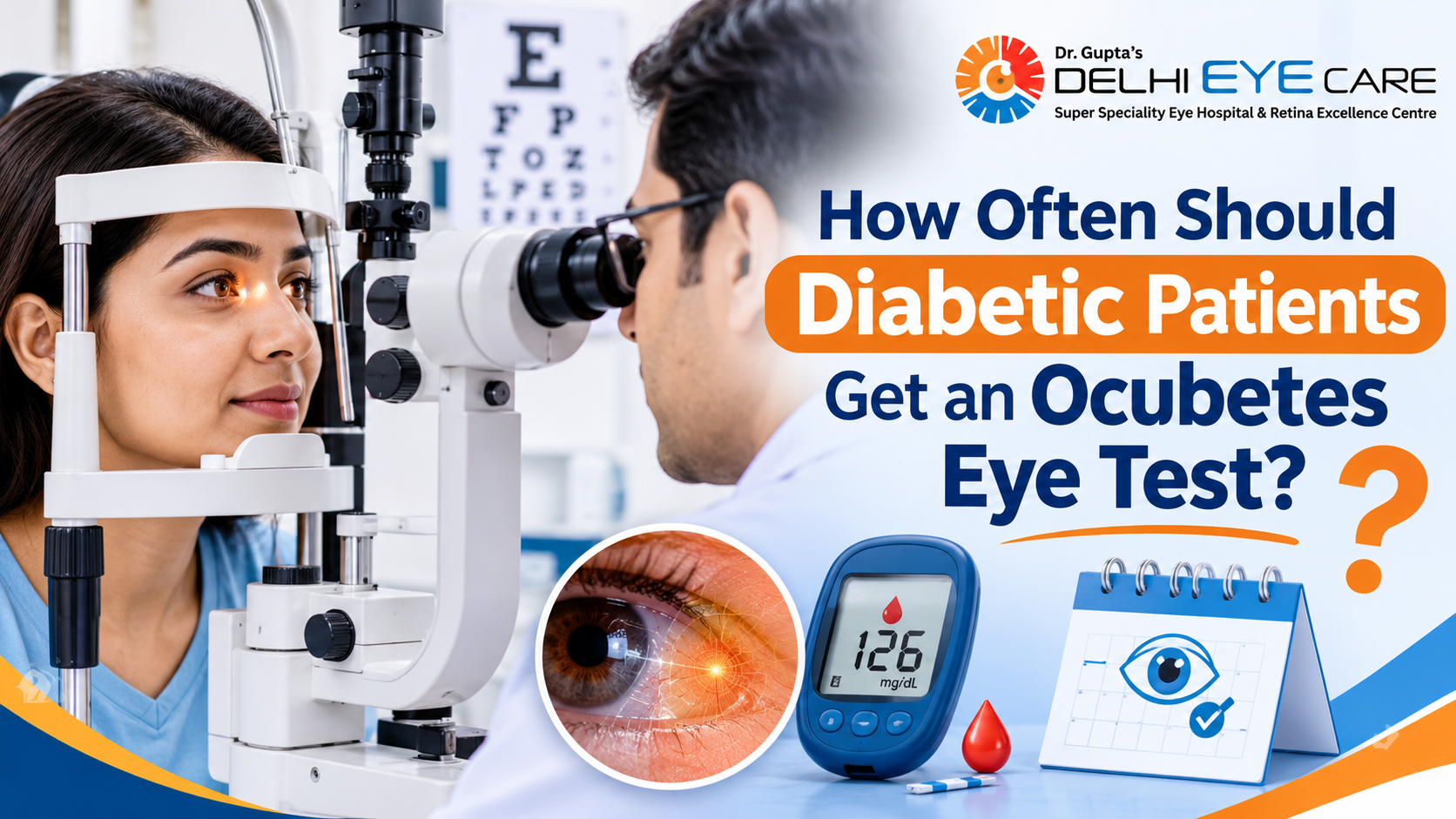

If you have diabetes but your vision is clear, you may wonder whether a retinal check is really necessary. Best Ocubetes Treatment in Delhi is designed around the important principle that clear vision does not always mean a healthy retina. Diabetes-related retinal changes can develop silently, without pain, blurring, or other obvious symptoms. Delhi Eye Care’s OCUBETES pathway focuses on early retinal evaluation, specialist interpretation, clear guidance, and planned follow-up.
According to the American Diabetes Association (ADA) 2026 Standards of Care, people with diabetes can have vision-threatening diabetic retinopathy without symptoms. For this reason, retinal screening is recommended even when day-to-day vision appears normal.
Why Can Diabetic Eye Problems Develop Without Symptoms?
Diabetes can affect the small blood vessels supplying the retina. In the early stages, these changes may not interfere with your ability to read, drive, work, or recognize faces.
This is one of the most important points I would explain during a diabetic eye consultation: symptoms are not always an early warning system for retinal disease.
The retina can undergo changes before a person notices any difference in vision. That is why relying only on a spectacle-power check or waiting for blurred vision may delay detection. Delhi Eye Care specifically explains that a normal vision test cannot rule out diabetic retinopathy.
What Exactly Is OCUBETES?
OCUBETES is a diabetic eye-care pathway at Delhi Eye Care that brings together retinal assessment, appropriate imaging, specialist interpretation, education, and follow-up.
The process is designed to answer a practical question:
“Where do my eyes stand today, and what should I do next?”
During an evaluation, the clinical team may consider:
- Your diabetes history and duration
- Current visual concerns
- Previous eye examination reports
- Dilated retinal examination
- Fundus photography when indicated
- OCT or other retinal imaging when clinically required
- Existing diabetic retinal changes
- The appropriate follow-up interval
The findings are then explained in understandable terms rather than simply giving you a technical report.
If I Can See Clearly, Why Should I Get My Retina Checked?
Clear vision is reassuring, but it does not completely exclude diabetic retinal disease.
The ADA states that people with vision-threatening retinopathy may remain asymptomatic. Early identification gives eye-care professionals an opportunity to monitor the condition and, when necessary, intervene before significant vision loss occurs.
From an experience-based patient-care perspective, this is particularly important because many people tend to schedule an eye appointment only after noticing blurred vision. A diabetic retinal assessment takes a different approach: look for changes before they become noticeable.
This does not mean that every person with diabetes will develop serious eye disease. It means that diabetes creates a reason for appropriate retinal surveillance.
Who Should Consider Diabetic Retinal Screening?
People with both type 1 and type 2 diabetes require appropriate eye screening.
The ADA recommends that adults with type 2 diabetes receive a comprehensive dilated eye examination at the time of diagnosis. For adults with type 1 diabetes, the initial comprehensive eye examination is generally recommended within five years after diabetes begins.
After that, the frequency depends on the individual’s retinal findings and diabetes-related risk factors. When previous examinations show no retinopathy and diabetes is well controlled, an interval of 1–2 years may sometimes be considered. If retinopathy is present or progressing, examinations may need to be more frequent.
Your retina specialist should determine the appropriate interval for you.
What Can OCUBETES Help Detect?
A diabetic retinal evaluation can help identify changes that may otherwise remain unnoticed.
Depending on the examination and clinical findings, doctors may look for:
- Early diabetic retinopathy
- Retinal blood-vessel abnormalities
- Diabetic macular edema
- Retinal swelling or fluid
- More advanced retinal changes
- Changes requiring closer monitoring
- Findings that may require specialist treatment
Not every abnormality requires immediate treatment. Some patients may simply need continued observation and better control of diabetes-related risk factors. Delhi Eye Care explains that treatment is recommended when the retinal findings genuinely require it.
What Happens During an OCUBETES Evaluation?
A typical evaluation begins by understanding your medical and diabetes history.
1. History and Vision Assessment
The doctor reviews your diabetes duration, treatment history, previous eye records, and current vision.
2. Retinal Examination
A dilated examination allows the retina to be assessed beyond a routine spectacle examination.
3. Imaging When Required
Depending on the clinical situation, retinal photography, OCT, or other investigations may be recommended.
4. Specialist Explanation
The findings are discussed with you so you understand whether your retina currently requires routine monitoring, closer observation, or further management.
5. Follow-Up Planning
Diabetic eye care should not necessarily end after one normal examination. Your next review should be based on your individual retinal findings and risk profile.
What Increases the Importance of Regular Eye Checks?
Several factors can influence diabetic retinopathy risk and progression, including the duration of diabetes and long-term blood-glucose control. The ADA also emphasizes management of blood pressure and lipids as part of reducing the risk or slowing progression of diabetic retinopathy.
Therefore, retinal care works best as part of overall diabetes management rather than as an isolated eye test.
If you notice sudden vision loss, new flashes, many new floaters, a curtain or shadow, distorted vision, or new dark areas, prompt eye care is important.
Why Choose Delhi Eye Care for OCUBETES?
Delhi Eye Care has developed its OCUBETES pathway around retina-led evaluation, patient education, personalised follow-up, and continuity of care. The clinic’s published information identifies Dr. Shashank Rai Gupta as a Vitreo-Retina Consultant and Retina Surgeon guiding the OCUBETES pathway.
Patients can benefit from an approach that focuses not simply on detecting a retinal abnormality, but on explaining:
- What the examination shows
- Whether treatment is actually required
- How closely the retina should be monitored
- What the next step should be
- How diabetic eye care fits with ongoing diabetes management
Delhi Eye Care also describes planned follow-ups and connected communication with the patient’s referring or diabetes-care team when appropriate.
This patient-focused approach can be particularly useful for people who feel well and therefore assume that an eye examination is unnecessary.
Final Thoughts
Seeing clearly is not a guarantee that your retina is completely unaffected by diabetes. Diabetic retinal changes can begin silently, which is why appropriate screening remains important even when your vision feels normal.
OCUBETES provides a structured way to evaluate the retina, understand your current status, and establish an appropriate follow-up plan. If you have diabetes, Best Ocubetes Treatment in Delhi discuss your individual screening schedule with an ophthalmologist or retina specialist rather than waiting for vision problems to appear.
FAQs
1. Can diabetic retinopathy occur with normal vision?
Yes, early and even significant changes can sometimes remain symptom-free.
2. Is OCUBETES only for people with blurred vision?
No, retinal evaluation can be useful even when vision remains clear.
3. Does every diabetic patient need retinal screening?
People with diabetes need screening according to their individual clinical circumstances.
4. Does diabetic retinopathy always require treatment?
No. Some retinal changes may only require monitoring and diabetes control.
5. How often should diabetic eyes be checked?
The interval depends on diabetes history, retinal findings, and specialist recommendations.